Thursday, July 21, 2016
JULY 21 = The First Battle of Bull Run
“You are green it is true, but they are green also, you are all green alike.” - Abraham Lincoln
"....we shall probably have a chance to pay our southern brethren a visit upon the sacred soil of Virginia very soon. I hope that we shall be successful and give the rebels a good pounding."
- Elijah Hunt Rhodes, 2'nd Rhode Island Infantry, July 16, 1861
These were among some of the optimistic views with which the Union Army and it's leaders marched into battle in this campaign. On today's date, July 21 in 1861 the Union and the Confederate armies clashed in the first major battle of the American Civil War. Their leader, Gen. Irvin McDowell was not at all sure that his green and only partially trained troops were ready for a major fight. But the 90 day enlistments of this first group of volunteers was coming to an end soon, and Lincoln didn't have time to wait. So with the assurance quoted above he ordered McDowell into action.
The First Battle of Bull Run Commences
So on July 16 McDowell marched his army of 35,000 men 30 miles west with the intention of capturing the vital railroad hub at Manassas, Virginia, and then to move on to Richmond, the Confederate Capitol, and end this rebellion quickly as everyone expected. But Confederate spies had alerted the Rebel leadership that they were coming. So an army of 22,000 under the command of Gen. Beauregard was sent north to meet them. It appeared that everyone knew that a battle was coming, because some of the finest members of society came along to watch with picnic baskets and bottles of Champagne. On the morning of today's date, July 21, McDowell ordered his men across Bull Run at Sudley Ford, and also on the left of their line at Matthews Hill. It was a violent assault which initially drove the rebels from one position after another. The fighting raged throughout the early afternoon, with the Confederates being forced all the way back to the hill in front of the Henry House. But one commander held fast to his position at a hill at the Rebel center. This was Gen.
Thomas Jackson (right). While other regiments faltered, Jackson held firm. One Confederate officer trying to steady his men yelled "Look! There's Jackson with his Virginians standing like a stone wall!" And thus was earned the nick-name by which Jackson would be known ever after.
The Tide Begins to Turn
The battle went back and forth throughout much of the day. But then some 9,000 Rebel reinforcements began to arrive, many by train, this being the first time in this war that troops would be moved in this way. At 4:00 in the afternoon Gen. Beauregard ordered a counterattack. This broke into the Union lines and sent them running from the field. Jackson urged his men forward telling them to "Yell like furies!" Thus was introduced the blood-curdling sound of the "Rebel Yell" that would echo across hundreds of battlefields in that war. The Union assault had been broken. These green troops were clearly not up to this kind of sustained fighting. By later in the afternoon McDowell was forced to pull his men back across Bull Run Creek (below).
One soldier, Corporal Samuel J. English of the 2'nd Rhode Island recalled the hurry and the disorder of this retreat:
"After I crossed I started up the hill as fast as my legs could carry and passed through Centreville and continued on to Fairfax where we arrived about 10 o'clock halting about 15 minutes, then kept on to Washington where we arrived about 2 o'clock Monday noon more dead than alive, having been on our feet 36 hours without a mouthful to eat, and traveled a distance of 60 miles without twenty minutes halt. The last five miles of that march was perfect misery, none of us having scarcely strength to put one foot before the other...."
Fortunately for the Union, the rebel troops were far too exhausted to chase after their beaten foes and thoroughly take advantage of their victory. But it was clearly a humiliating defeat for the mighty Union Army which wound up getting back to Washington D.C. just ahead of all of the High Society swells who had come out to watch the war like it was a picnic, and wound up retreating along with their beaten army. One thing was quite clear: this was going to be a long and bloody war. The days of ninety day enlistments for local militia was past. This war was going require well-trained armies of professional soldiers. The 5,000 casualties which so shocked the public in this engagement would soon be dwarfed by subsequent battles. This was to be the world's first taste of modern warfare.
Sources =
http://www.civilwaracademy.com/bull-run.html
"The American Heritage Picture History of the Civil War" by Bruce Catton, American Heritage
Publishing Co. Inc., 1960
http://www.eyewitnesstohistory.com/bullrun.htm
https://en.wikipedia.org/wiki/First_Battle_of_Bull_Run
Friday, July 8, 2016
JULY 8 = The "Liberty Bell" is Rung
On today's date, July 8 in 1776, the Liberty Bell was rung in celebration of the Declaration of Independence.
Of course as readers of this Blog are aware, the Declaration was actually passed on July 2, but it wasn't ready to be signed until July 4. And no announcement was made about it until copies of it came back from the printers on July 8. At that time the contents of the Declaration were ready for reading to the public, and it was on this day that the Liberty Bell tolled for the newly proclaimed United States of America. Although no contemporary accounts mention it specifically, bells were rung all over the city, and most historians agree that Liberty was one of them. But it was not especially famous at the time, and wasn't even called the "Liberty Bell" until some years later.
The Liberty Bell Was Cast in 1751
The Bell's construction was ordered originally to commemorate the 50'th Anniversary of the constitution of the then colony of Pennsylvania. Isaac Norris, speaker of the Pennsylvania Provincial Assembly, sent orders to Robert Charles, Pennsylvania's agent in London to acquire "good Bell of about two thousands pound weight". Norris also added the following directions:
"Let the bell be cast by the best workmen & examined carefully before it is Shipped with the following words well shaped around it vizt. By Order of the Assembly of the Povince of Pensylvania for the State house in the City of Philada 1752 and Underneath Proclaim Liberty thro' all the Land to all the Inhabitants thereof.-Levit. XXV. 10."
So with this biblical quote going onto it to "Proclaim Liberty thro' all the Land" as Moses did in the Old Testament, the Bell was cast and brought to Philly and hung in the steeple of the Statehouse (above) in June of 1753. And from that perch it did honorable service for years being rung to call the people together for important events and proclamations such as King George's accession to the throne in 1761, and also to announce discussion off the very unpopular Stamp Act. In April 1775 it tolled to the news of the fighting at Lexington and Concord.
The Liberty Bell is Moved, Named, and Cracked
As the war shifted and the British moved on Philadelphia in the autumn of 1777 the bell was in danger off being captured by the Brits and melted down to be made into a cannon. So the bell was moved to Allentown where it was hidden for the duration of the war, being returned in 1781. It continued in use for ceremonial occasions for many years. In 1839 William Lloyd Garrison, the famed abolitionist printed a pamphlet which included a poem called "The Liberty Bell" in which it was noted that in spite of its inscription, the bell did not proclaim liberty to all the inhabitants off the land. And the application stuck. There are differing accounts on how the bell acquired its famous crack. One account holds that it was cracked in 1835 while being rung for the funeral of Chief Justice
John Marshall. Another account holds that the bell was damaged beyond repair in 1846 while beig rung in honor of George Washington's birthday. Whatever the cause, the Liberty Bell continues to be kept in Philadelphia to this day (right); an enduring symbol of our nation's freedom.
Sources =
https://en.wikipedia.org/wiki/Liberty_Bell
http://www.history.com/this-day-in-history/liberty-bell-tolls-to-announce-declaration-of-independence
http://mentalfloss.com/article/51529/how-did-liberty-bell-get-cracked
Tuesday, July 5, 2016
JULY 5 = The "Bikini" is Introduced in Paris
In my never-ending quest to see that you, my T.I.H. readers are kept aware of the most important events in history on any given day I bring you this: on today's date, July 5 in 1946 French designer Louis Reard introduced a revealing two-piece swimsuit at the Piscine Molitor, a popular swimming pool in Paris. Reard named his new product the "Bikini" after Bikini Atoll in the Pacific Ocean wherein Atomic Bomb testing was being conducted. Why it is that the designer chose to link a small women's bathing suit with the ultimate weapon of mass destruction seems an odd question to which I may have a possible partial answer by the end of this posting. We'll see... but I make no promises.
What EXACTLY IS a Bikini?
Well, just in case any of you out there are somehow unclear on this point we will turn to "Wikipedia" for a proper definition:
"A bikini is usually a women's abbreviated two-piece swimsuit with a bra top for the chest and underwear cut below the navel. The basic design is simple: two triangles of fabric on top cover the woman's breasts and two triangles of fabric on the bottom cover the groin in front and the buttocks in back. The size of a bikini bottom can range from full pelvic coverage to a revealing thong or G-string design." So there you have it - two triangles on top and two (or maybe just one) on the bottom.
The Bikini Developed as a Wartime Measure
Ok, while that may be stretching the truth a bit, wartime needs did play a role in this story. In Europe of the 1930's women had been wearing a
kind of two-piece bathing suit all along which was made up of a halter top and shorts. But very little of the midriff was exposed, and none of the navel was visible. Over here in America a fairly tame version of the two piece began appearing during World War II. The war brought on fabric shortages and the rationing of their use requiring the removal of the skirt panel and other unnecessary bits of material. This version looked something like the suit Betty Grable is wearing at right. But heavily fortified coastlines pretty much put a stop to developments in ladies swimwear like everything else not related directly with the war.
The War Ends and Things Cut Loose
So the war ended in 1945. And beach lovers in 1946 were looking forward getting back to the beach for the first time in years. And some, including a pair of French fashion designers were really ready to cut loose. Fabric shortages due to the war were still in effect, so in an
attempt to revive sale of ladies swimsuits, two French designers – Jacques Heim and Louis RĂ©ard (right), launched a new and quite daring design which took advantage of the lingering fabric shortage simply by using less fabric, and leaving more skin on display than had ever been tried before. Heim called his version the "Atome" named after the world's smallest particle - the Atom - calling his creation "the smallest bathing suit in the world". Whereas Reard went a step further introducing his creation as "smaller than the smallest bathing suit in the world." At a mere 30 inches of fabric a fair claim, and naming it the"Bikini"... in his words: "like the [atom] bomb, the bikini is small and devastating". Reard at first thought the Bikini would horrify the world perhaps with this name reference, but he stuck to it.
The Bikini's Reception is Shock and Awe
Whatever Reard's confidence in his design, he ran into trouble conveying that to others, as no professional model was willing to
appear in this (nearly) show-all design. So he wound up hiring one Micheline Bernardini (left), a nude dancer at the Casino de Paris, who had no trouble at with the idea of strutting her stuff nearly nude in public. Reard was so certain of the newspaper headlines his suit would generate, that he made the suit with newspaper design printed across it. and he had his model holding a 2" x 2" box into which the suit would fit. Naturally the suit was a tremendous hit critically with men who sent Reard about 50,000 fan letters. But the staid French newspaper "Le Figaro" kept all the fuss in prospective: "People were craving the simple pleasures of the sea and the sun. For women, wearing a bikini signaled a kind of second liberation. There was really nothing sexual about this. It was instead a celebration of freedom and a return to the joys in life."
The Bikini Is Slow to Catch On
The Bikini was a great success in France, and soon began making appearances along the Mediterranean and Spanish coasts. Although some attempts were made to outlaw it in some such spots, eventually local officials bowed to the popular tide. But in spite of it's initial success in France, sales were sluggish, and by the 1950's Reard was back to making the more traditional one-piece design. And in America, buyers resisted the bikini through the 1950's. But once the 1960's arrived with its care-free youth movement in the air the bikini finally began to catch on with it being featured in the Frankie Avalon/Annette Funicello beach party movies.
And since then the bikini has become a fashion mainstay for better or for worse, although it seems to be getting progressively smaller all the time to a degree that might have made even Micheline Bernardini blush... well a little bit anyway....
Sources =
http://www.history.com/this-day-in-history/bikini-introduced
http://www.smithsonianmag.com/smart-news/the-bikinis-inventor-guessed-how-much-it-would-horrify-the-public-6914887/?no-ist
Thursday, June 30, 2016
JUNE 30 = "Gone With the Wind" is Published
On today's date - June 30 in 1936, "Gone With the Wind", Margaret Mitchell's sweeping epic about the American Civil War With was published. The book was an immediate best seller making Mrs. Mitchell (left) a celebrity which she didn't want to be. And it was all from a book that she wrote out of boredom, and which she didn't really want to publish.
Margaret Mitchell Grows Up to Be a Reporter
Born on November 8, 1900, in Atlanta, Georgia, Margaret Mitchell was a child of a wealthy and politically prominent Irish-Catholic family. She had two brothers before her, both of whom died in infancy. Her father was Eugene Muse Mitchell, a successful attorney, and her mother was Mary Isabel "May Belle" (or "Maybelle") Stephens, who was a strong minded woman who in fact was a suffragist (a supporter of women's right to vote). So young Margaret came from solid stock. And as a young girl she liked to write stories. her family was steeped in Southern Confederate history. When she was six years old her mother would take her on buggy rides past the old ruined remains of once grand plantation homes telling her of the terrible catastrophe of war that had destroyed all in its path. And she recalled her mother's words:
"She talked about the world those people had lived in, such a secure world, and how it had exploded beneath them. And she told me that my world was going to explode under me, someday, and God help me if I didn't have some weapon to meet the new world."
The weapon which Mitchell developed was writing. In 1918, Margaret enrolled in a college in Massachusetts: Smith College in Northampton. In 1922 she got herself a job with the Atlanta Journal Sunday Magazine. She flourished in this environment writing some 130 articles. Unfortunately, she suffered a broken ankle in 1926 and this brought her journalistic career to and end.
Boredom Leads to "Gone With the Wind"
Mitchell had married John R. Marsh in 1925 (an earlier marriage had failed in less than a year). While she nursed her ankle, her husband would bring home arm loads of books for his bored wife to read. Eventually he grew weary of this and said: "For God's sake, Peggy, can't you write a book instead of reading thousands of them?" Towards that very end, John Marsh brought home a Remington Portable No. 3
typewriter. Mitchell perched this little typewriter on a small desk in a corner of their small apartment (right), and for three years Mitchell worked on a Civil War-era novel whose heroine was named Pansy O'Hara. Mitchell said that she had the story all worked out in her head before she started. And she wrote the final chapter first, filling in the other chapters in fits and starts over the years of writing. Sometimes she would hide the manuscript to keep her work secret.
Mitchell Seemed Reluctant to Publish...
She only showed it to an editor after being goaded into it by friends. And even then she didn't want to have it published. She denounced it on several occasions as “a rotten book” saying that she hated the act of writing. Eventually, Mitchell gave the manuscript to Harold Latham of MacMillan Publishing in New York. Mr. Latham had one substantial change to suggest: changing the name of the story's
heroine to something other than "Pansy". Mitchell agreed to change it
to "Scarlett".So the book was published on today's date back in '36. And it caused a immediate to sensation, selling one million copies in six months. It won the Pulitzer Prize for literature in 1937. And of course the rights to it were snapped up by Hollywood Producer David O'Selznick (above) for a cool $50,000.00. Quite a tidy sum for that time. The book had and to this day has it critics for its foolish and quite inaccurate portrayal of African American slaves as being happily devoted to their benevolent masters. The film version goes even further in perpetuating this age-old southern myth.
Nevertheless, "Gone With the Wind" has gone on to be an American literary classic. As has the film
version - although Mitchell opted out of any participation in the filming process. But she was said to have been pleased with the film. I enjoy watching it although I am fully aware of the totally bogus depiction of the master/slave relationship. The portions depicting Southern Society are accurate as are the depictions of the destruction and misery wrought upon that seemingly genteel world by that momentous conflict. One can only read Mrs. Mitchell's book or watch the film version and decide for themselves. In any event the personal publicity which the book brought to Mrs. Mitchell was quite unwelcome, and she became fiercely protective of her privacy thereafter. "Gone With the Wind" wound up being her only novel. She died in August of 1949 after being hit by a speeding automobile while crossing a street in Atlanta, Georgia.
Sources =
https://en.wikipedia.org/wiki/Margaret_Mitchell
http://www.history.com/this-day-in-history/gone-with-the-wind-
http://www.biography.com/people/margaret-mitchell-9410340published
http://www.biography.com/news/margaret-mitchell-facts-biography
"Past Imperfect - History According to the Movies" by Mark C. Carnes- "Gone With the Wind" by Catherine Clinton, Henry Holt & Co., New York, 1995.
Monday, June 13, 2016
SPECIAL = "Stage Coach" Mary
"...she drinks whiskey, and she swears, and she is a republican, which makes her a low, foul creature."
- Schoolgirl's Essay
“could whip any two men in the territory” and “had a fondness for hard liquor that was matched only by her capacity to put it away.”
- Actor Gary Cooper
These are two very similar reactions to one of the oddest characters in the history of America's Old West: Miss Mary Fields, otherwise known as "Stagecoach Mary". I first became aware of Mary while watching the first half of the final season of "Hell on Wheels" the western drama on the AMC Television Network. And I was so intrigued that I had to do a posting about her, now that the series is in its final season. I'm not even sure that Mary will make any appearances in the remaining episodes. But I wanted to write just a little about her while she's still in my mind. I'm not certain how many of the characters in "Hell on Wheels" are based on actual historical figures, other than Thomas C.
Durant, President Grant, and Brigham Young. But "Stagecoach Mary" played by Amber Chardae Robinson (left) just seemed too odd an addition to be fictional, so I looked her up and there she was, very much a real, fact-based character - ALWAYS ready for a fight!!
Stagecoach Mary Was Born a Slave
Stagecoach Mary began life as a slave - Mary Fields - in Marin Hickman County, Tennessee, where she was born around 1832. As she was a slave child records are sketchy. But with the end of the Civil War came an end to legal slavery in the United States. She worked for a time in the home of Judge Edmund Dunne. Following the death of the Judge's wife Josephine in 1883 in San Antonio, Florida, Fields took the family's five children to live with their Aunt, Mother Mary Amadeus (below),
the Mother Superior of a convent in Toledo, Ohio. Mary Amadeus was assigned to set up a school for Native American girls: St. Peter's Mission in Cascade Montana. Mary Fields was very fond of Mother Mary, so when she received word that Mother Mary was ill with pneumonia, Fields rushed to Montana, and nursed her back to health. After Amadeus recovered Fields stayed on at St. Peter's doing laundry, growing vegetables, tending chickens, as well as some typically men's jobs such as hauling freight, repairing buildings and eventually becoming the forewoman.
Mary Fields is Obliged to Leave Montana
Around 1894, Mary Fields had developed some pretty hard drinking habits, and she wasn't at all shy about asserting her authority over the male employees of St. Peter's (below). The Native Americans named
Fields as the "White Crow" because they said "she acts like a white woman but has black skin." Indeed the essay from the schoolgirl at the top of this posting was written during this time. After some complaints by one such employee who was angry that this black woman made more than he did an incident that involved some gunplay broke out and the Bishop asked her to leave. She tried opening up a kitchen, but this failed after two years either because she gave food away to too many of the needy who couldn't afford it, or just because she was a lousy cook, depending on which internet source you believe. But there was as opening for a stagecoach driver for the U.S. Postal Service. Mary managed to win this job either because she could hitch a team of horses more quickly than the other applicants, or because Mary Amadeus interceded on her behalf, again depending on whose internet account you are reading.
the Mother Superior of a convent in Toledo, Ohio. Mary Amadeus was assigned to set up a school for Native American girls: St. Peter's Mission in Cascade Montana. Mary Fields was very fond of Mother Mary, so when she received word that Mother Mary was ill with pneumonia, Fields rushed to Montana, and nursed her back to health. After Amadeus recovered Fields stayed on at St. Peter's doing laundry, growing vegetables, tending chickens, as well as some typically men's jobs such as hauling freight, repairing buildings and eventually becoming the forewoman.
Mary Fields is Obliged to Leave Montana
Around 1894, Mary Fields had developed some pretty hard drinking habits, and she wasn't at all shy about asserting her authority over the male employees of St. Peter's (below). The Native Americans named
Fields as the "White Crow" because they said "she acts like a white woman but has black skin." Indeed the essay from the schoolgirl at the top of this posting was written during this time. After some complaints by one such employee who was angry that this black woman made more than he did an incident that involved some gunplay broke out and the Bishop asked her to leave. She tried opening up a kitchen, but this failed after two years either because she gave food away to too many of the needy who couldn't afford it, or just because she was a lousy cook, depending on which internet source you believe. But there was as opening for a stagecoach driver for the U.S. Postal Service. Mary managed to win this job either because she could hitch a team of horses more quickly than the other applicants, or because Mary Amadeus interceded on her behalf, again depending on whose internet account you are reading.
Mary Fields Becomes "Stage Coach Mary"
Mary's physical appearance by this time was most imposing: Fields stood 6 feet tall and weighed about 200 lbs, and liked to smoke a rather pungent type of hand-rolled cigar. Her skin was once described as "black as a burnt-over prairie." She was known to pack a pistol
strapped under her apron, and always had a jug of whiskey by her side. She dressed in much the same garb a man would in her job, wearing a wool cap and boots with her apron covering her in front. But importantly, her acquisition of this job made her was the first African-American woman employed as a mail carrier in the United States and the second woman to work for the United States Postal Service. And she achieved all of this at the age of 60! She never married and though she was quite literate she left no writings behind. She drove her route utilizing horses and a mule named Moses. And she earned her moniker "Stage Coach Mary" by being utterly and relentlessly reliable. She never missed a day of work, and if the snow was too deep for her horses to make it the full distance, she would slap on snowshoes, sling the mail over her back and make the delivery on foot.
Stagecoach Mary's Retirement and Legacy
All of this hard living, and hard riding eventually began to take its toll even on such a sturdy woman as Stagecoach Mary. So she finally retired in 1901 to Cascade Montana. But she still needed a source of income, so she opened a laundry service. And she regularly supported the local baseball team (below). She had a standing bet (which she never lost) that she could knock out any man with one punch. And
the mayor granted her a permit that made her the only woman who wasn't a prostitute who could drink in any bar in town. Her personality was indeed remarkable and pugnacious to say the least. But her contribution to not only women's history, but also to the history of Montana was also important . In the words of www.blackcowboys.com : "...reaching remote miner's cabins and other outposts with important mail which helped to accommodate the land claim process, as well as other matters needing expeditious communication. These efforts on her part helped greatly to advance the development of a considerable portion of central Montana, a contribution for which she is given little credit."
Miss Mary Fields died in 1914. A young boy who lived in Cascade during Mary's retirement years, who would grow up to be the movie star, Gary Cooper wrote of her in "Ebony" magazine in 1959:
"Born a slave somewhere in Tennessee, Mary lived to become one of the freest souls ever to draw a breath, or a .38."
Sources =
https://en.wikipedia.org/wiki/Mary_Fields
http://www.blackcowboys.com/maryfields.htm
http://www.historynet.com/mary-fields-female-pioneer-in-montana.htm
http://montanawomenshistory.org/the-life-and-legend-of-mary-fields/
http://plainshumanities.unl.edu/encyclopedia/doc/egp.afam.019
Wednesday, June 8, 2016
JUNE 8 = James Earl Ray is Arrested
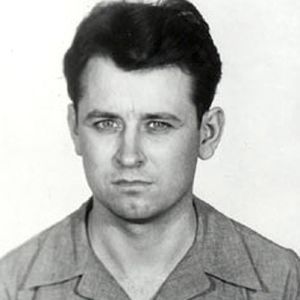
On today's date, June 8 in 1968, James Earl Ray, was arrested in London, England, and charged with the assassination of African American civil rights leader Martin Luther King, Jr. On April 4, 1968, in Memphis, Dr. King was killed by a gunshot from a sniper while he stood on the balcony of his room at the Lorraine Motel in Memphis, Tennessee. Later that evening, investigators found a Remington .30-06 hunting rifle one block from the Lorraine on a sidewalk by a rooming house near the Motel. Over subsequent weeks, the weapon, fingerprints found on it, as well as eyewitness accounts all combined to point a guilty finger one James Earl Ray (above), a small-time criminal who had escaped from a prison in Missouri wherein he was serving a sentence for a holdup, and from which he had escaped in April of 1967. Ray had been able to escape the massive manhunt that had been seeking him by using a false ID to acquire a Canadian passport which was fairly easy to do at that time.
Ray - the Likely Suspect
Since his escape from prison in Missouri, Ray had moved around the south and southwest of the U.S.,
even spending time in Mexico trying to produce pornographic films. But eventually he returned to Los Angeles, CA. where he took an interest in George Wallace's presidential campaign. Ray was an outspoken racist, and liked Wallace's segregationist platform. He considered moving to Rhodesia where a white minority government ruled. Indeed this was Ray's ultimate destination when he was arrested by investigators from Scotland Yard on today's date at London's Heathrow Airport. The name on Ray's passport -- Sneyd -- was on a watch-list kept by the Royal Canadian Mounted Police. Officials then noticed that Ray carried a second passport under a second name. Clearly this man was up to something. So he was apprehended by Scotland Yard and identified as the suspect in the murder of Dr. King. He was then quickly extradited back to the U.S. where he was charged with Dr. King's killing. Ray stood before a Memphis judge in March 1969 and pleaded guilty to King’s murder in order to avoid the electric chair. He was sentenced to 99 years in prison.
Ray Recants Confession, Later Attempts to Escape.
It took Ray a mere three days to recant his confession. He claimed that he had been set up as a "patsy" in a larger conspiracy Allegedly a shadowy character named "Raoul" had gotten him involved in a gun-running scheme. But by April 4 he realized that he was the intended fall-guy for the King murder, and that this had been why he had fled to Canada and from there on to London.
Ray’s motion was denied, as were his dozens of other requests for a trial during the next 29 years. Ray made an attempt with six fellow convicts to flee captivity, escaping from the Brushy Mountain State Penitentiary in Petros, Tennessee, on June 10, 1977. But this freedom was short-lived as Ray and the others were recaptured on June 13. A year was added to Ray's previous sentence, totaling it to 100 years. There have been numerous conspiracy theories set up around this case as always happens in the case of political murders. Some of these theories have even been supported by some members of the late Dr. King's family. But none of them ever held up. Ray died at the Columbia Nashville Memorial Hospital in Nashville on April 23, 1998, at the age of 70, from complications related to kidney disease and liver failure caused by hepatitis.
Sources =
http://www.history.com/this-day-in-history/king-assassination-suspect-arrested
https://en.wikipedia.org/wiki/James_Earl_Ray
Thursday, May 12, 2016
MAY 12 = The Civil War's Last Battle
"Boys, we have done finely. We will let well enough alone, and retire."
These were the words of Col. John "Rip" Ford to his men following the Battle of Palmetto Ranch which begun on today's date, May 12 in 1865. This was the final battle of the American Civil war which was begun for reasons that are not clear.
The Troops in Texas
As he Civil War drew to a close, there were troops spread out all over the country. More than a full month after Robert E. Lee's surrender at Appomattox there were still several thousand troops on both sides in Texas. At the southernmost tip of the state where the Rio Grande River empties into the Gulf of Mexico lay Brazos Santiago Island wherein was stationed 2,000 Union troops. Among these were the 62nd and 87th U.S. Colored Infantry, the 34th Indiana and a small number of loyal Texans who had signed on for cavalry service but were dismounted for lack of horses. Facing them across the bay and some miles inland, were some 1,200 men left by March 31 under the command of Confederate Brig. Gen. James E. Slaughter.
Barrett Moves Against the Rebels
These troops had been observing a kind of unofficial truce for some time. But for reasons that are unknown Union Colonel Theodore H. Barrett (below) ordered an attack on a Confederate camp near Fort Brown. It has been suggested that Barrett may have been looking to get
in some combat before the war was over. He may have been after some of the horses which the Confederates had. Whatever his reasons, Col. Barrett ordered some 250 men of his "colored" troops, and 50 of his dismounted cavalry to cross from Brazos Island to the mainland at Boca Chica Pass and move to occupy Brownsville. Under the command of Lt. Col. David Branson they did so on May 11 at 9:30 pm. They then marched all night, reaching White's Ranch by daybreak on the 12th. There they stopped to rest, but were seen by Rebel Scouts. Barrett had hoped to surprise the rebels at Brownsville, but realizing that he had been spotted he immediately resumed his march to his target.
The Battle of Palmetto Ranch
Branson's men left at 8:30 that morning traversing 112 miles to Palmetto Ranch, arriving at noon. Once there they immediately fell into a skirmish with Capt. W. N. Robinson's 190 man company of Texas Cavalry Battalion, The two sides exchanged gunfire, but nobody was injured. After this brief exchange, the rebels fell back. Branson's men did not pursue, but instead moved into the ranch and made their dinner. In the meantime, Robinson sent word of the attack back to Brownsville, where Col. Ford (below) began gathering up as many men
as he could to come to Robinson's aid. But Robinson was not waiting for reinforcements. He gathered up what men he could and launched a bold counterattack later that day taking Branson's men quite by surprise, sending then reeling back towards White Ranch. From there Branson sent word to Col. Barrett, asking for reinforcement. This, Barrett did arriving himself with 200 men from his Indiana regiment. He arrived at about 5:30 a.m. on the 13th. These men fought Robinson's 190 man force, pushing them back, until Col. Ford arrived with rebel reinforcements of about 300 men, and artillery. This force then unleashed cannon fire on Barrett's force, forcing them all the way back to Brazos Island. At this point the "colored" troops formed a line and were able to beat off the attack Ford's force leading to his quote from the top of this posting.
The Last Man Killed....
In all of this fighting in what was clearly a Confederate victory in this final battle of the Civil War, the Union suffered only four men killed. One of these was the last man killed in the Civil War: John J. Williams of the 34th Indiana Infantry, pictured at right.
Sources =
https://en.wikipedia.org/wiki/Battle_of_Palmito_Ranch
http://www.historynet.com/battle-of-palmetto-ranch-american-civil-wars-final-battle.htm
https://tshaonline.org/handbook/online/articles/qfp01
https://en.wikipedia.org/wiki/John_J._Williams_(American_Civil_War)
Subscribe to:
Posts (Atom)